

Service
Web & mobile applications
Marketing sites, product UIs, and cross-platform apps that load fast, convert clearly, and hold up under real traffic.
12+ projects
Web and mobile experiences shipped for real businesses
9 service domains
Frontends paired with backend, UX, and cloud when needed
5+ industries
Clinics, travel, services, retail, and education surfaces
Performance-first
Core Web Vitals and a11y treated as build requirements
Why AAGTEK
Why teams choose Web & mobile
Your product is judged in the first three seconds — we build experiences that earn that attention.
Performance as a requirement
Core Web Vitals and mobile-first delivery from the first prototype — not a post-launch rescue.
SEO-ready structure
Server rendering, clean URLs, and accessible markup so search and AI surfaces can find you.
Web and mobile, one team
Shared product thinking across Next.js and cross-platform mobile — fewer hand-off gaps.
Built for real usage
Error states, loading, and accessibility covered so demos survive production traffic.
API-integrated product UI
Contracts agreed upfront so frontend and backend can move in parallel without guesswork.
Hardening before launch
Lighthouse, axe, and real-device checks in the pipeline — not a last-week scramble.
Brand without bloat
Expressive UI that stays fast — imagery and motion that serve conversion, not vanity weight.
Delivery
4 clear phases
01
Discover & frame
02
Prototype & measure
03
Build production UI
04
Harden & launch
What we offer
Web & mobile: what we deliver
Scoped offerings for this service — clear outcomes, not a laundry list of buzzwords.
- 01
Marketing sites that convert
Fast, responsive sites with clear CTAs, structured content, and analytics-ready events.
- Landing and multi-page marketing architectures
- SEO-friendly rendering and metadata
- Forms and lead capture wired to your CRM
- 02
Next.js product applications
Server-rendered, TypeScript-first apps with component architecture your team can extend.
- App Router patterns and route-level data loading
- Auth-aware layouts and protected flows
- Deployable on Vercel or your own Node hosting
- 03
React Native mobile apps
Cross-platform iOS and Android with shared product logic and native feel where it matters.
- Navigation and offline-aware patterns
- Push and deep-link ready foundations
- Native modules only where platform APIs require them
- 04
Flutter delivery patterns
Flutter-based mobile when your team or product roadmap favors that ecosystem.
- Consistent UI across iOS and Android
- Structured state and API layers
- Store-ready build and release hygiene
- 05
Customer and partner portals
Role-based portals for bookings, accounts, orders, and staff workflows on any device.
- Responsive layouts for desk and field use
- Permission-aware screens and actions
- Audit-friendly activity where operations need it
- 06
Progressive web apps (PWA)
Installable, resilient web apps when a store build is not the first step.
- Offline and cache strategies matched to the use case
- Home-screen install and push where supported
- One codebase for web-first product surfaces
- 07
API-integrated product UI
Frontends that speak cleanly to REST, GraphQL, or webhook-backed backends.
- Typed clients and agreed API contracts
- Loading, empty, and error states designed in
- Parallel frontend/backend delivery without blocking
- 08
Performance and accessibility hardening
Make speed and inclusion measurable before launch — and keep them in CI after.
- Core Web Vitals budgets and image strategy
- WCAG-oriented keyboard and contrast checks
- Lighthouse and axe gates in the pipeline
Benefits
Why Web & mobile pays off
Outcomes your team and customers feel — not a feature checklist.
- 01
First impressions that hold
Fast first paint and clear hierarchy so visitors stay long enough to act.
- 02
One product story across devices
Web and mobile share flows and language — less rework when you expand channels.
- 03
Search and shareability
Server rendering and accessible markup help search engines and link previews represent you accurately.
- 04
Fewer production surprises
Error, empty, and offline states are designed before users invent workarounds.
Overview
What Web & mobile covers
This is the customer-facing layer of your product — marketing sites, web apps, and mobile experiences that people judge in seconds. We build on performance-first stacks (Next.js and React on the web; React Native or Flutter patterns on mobile), with accessibility and responsive behaviour treated as launch requirements, not polish applied after the fact.
Whether the brief is a conversion-focused marketing site, a full product UI, a customer or partner portal, or a PWA that works offline-first, the work covers interface through API integration — so what ships is fast across devices, measurable in Core Web Vitals, and resilient under real usage rather than demo conditions alone.
How we work
Web & mobile delivery process
A clear sequence from discovery to launch — paced to your constraints, not a fixed calendar.
- 01
Discover & frame
Audit goals, audience, brand, and existing assets — then wireframe the key flows.
- 02
Prototype & measure
Responsive prototype with real content; establish Core Web Vitals baselines early.
- 03
Build production UI
Develop with accessibility, API integration, and resilient states covered.
- 04
Harden & launch
Device QA, performance and a11y gates, analytics, and go-live checklist.
Stack
Web & mobile: technology we deliver with
Chosen for your constraints — not a default stack forced onto every brief.
Next.js
SSR/SSG product and marketing apps with strong SEO defaults
- SSR/SSG for SEO and performance
- App Router patterns your team can own
React
Component-driven UIs shared across web surfaces
- Component-driven UI shared across surfaces
- Patterns that map to your design system
React Native
Cross-platform mobile with shared product logic
- One codebase for iOS and Android
- Native modules only when required
Flutter
Alternative mobile stack when the roadmap favors it
- Consistent UI across platforms
- Store-ready release hygiene
TypeScript
Typed contracts from UI through API clients
- Typed contracts from UI to APIs
- Fewer runtime surprises in product code
Tailwind CSS
Consistent, maintainable styling without CSS sprawl
- Consistent spacing and tokens
- Less CSS sprawl across pages
Vercel
Preview deploys and edge-friendly hosting for Next.js
- Preview deploys on every PR
- Edge-friendly hosting for Next.js
Node APIs
BFF and backend endpoints that match frontend needs
- BFF endpoints matched to UI needs
- Clear ownership between web and API
Industries
Where Web & mobile shows up
Industry context shapes the product — we design for your audience, not a generic template.
- Clinics & dental practices
- Travel & hospitality
- Barber & beauty services
- Fitness & wellness
- Restaurants & food brands
- Retail & e-commerce
- Real estate & property
- Education & academies
- Events & venues
- Professional services
- Diagnostics & health ops
- Local service businesses
Proof
Related projects
Live case studies that reflect this service in production.
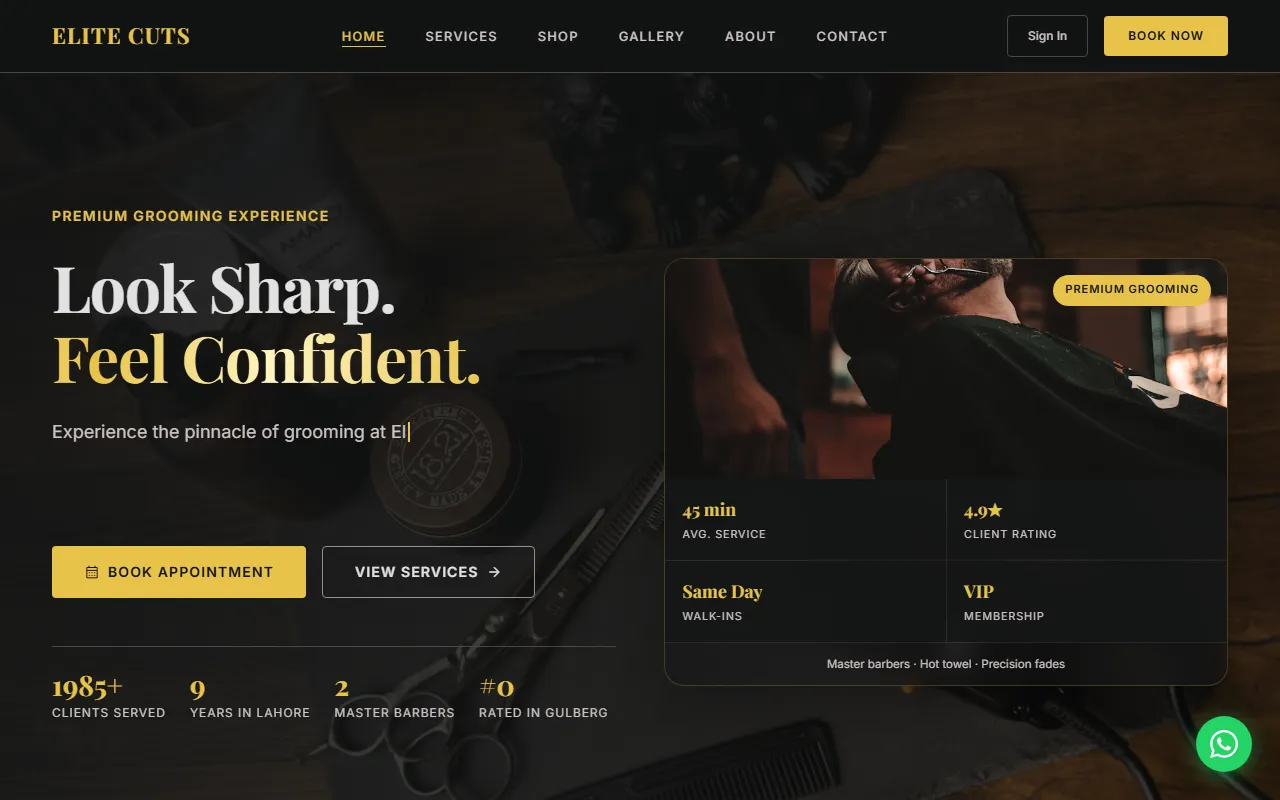
Elite Cuts Barber Studio
A full-stack barber shop platform — online booking, service catalog, retail shop, gallery, and a gated preview experience for prospective clients.
View case study →
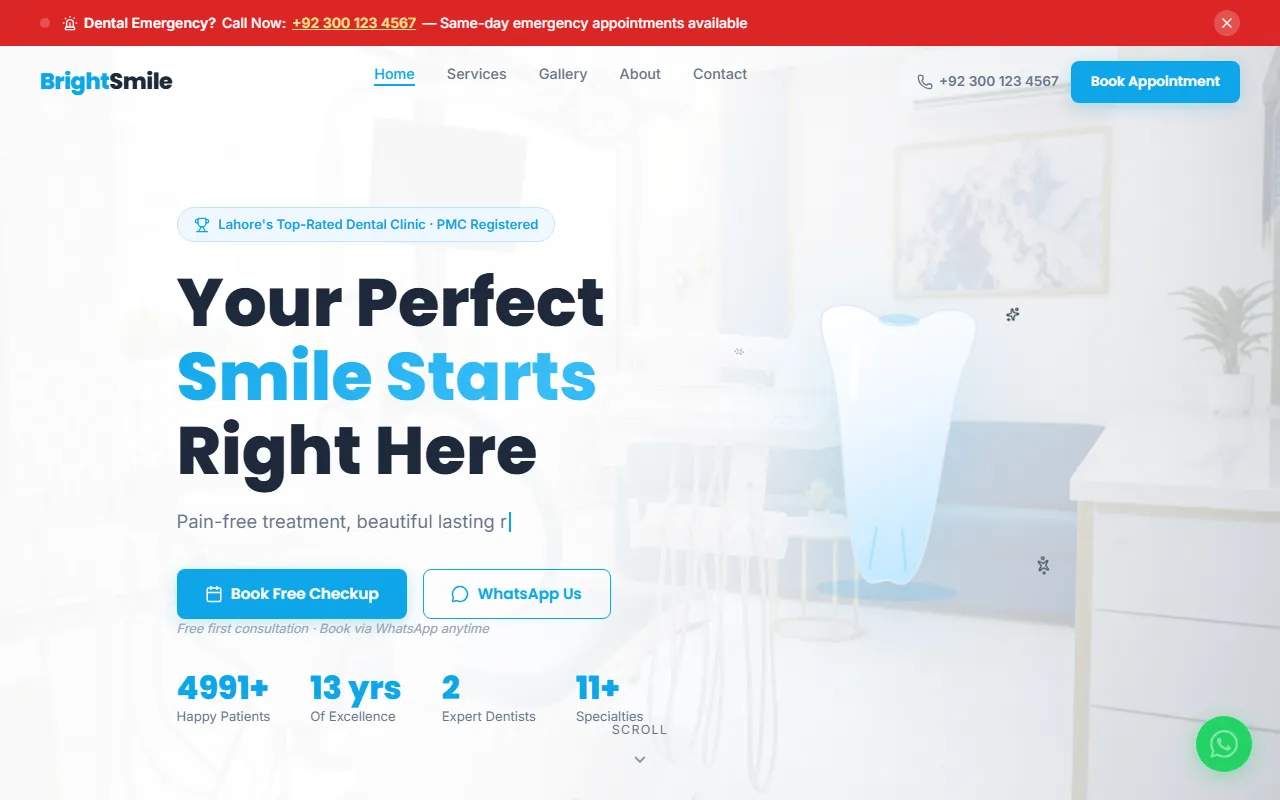
BrightSmile Dental Clinic
A modern dental clinic website — service catalog, online booking, before/after gallery, team profiles, and a gated preview experience for prospective patients.
View case study →
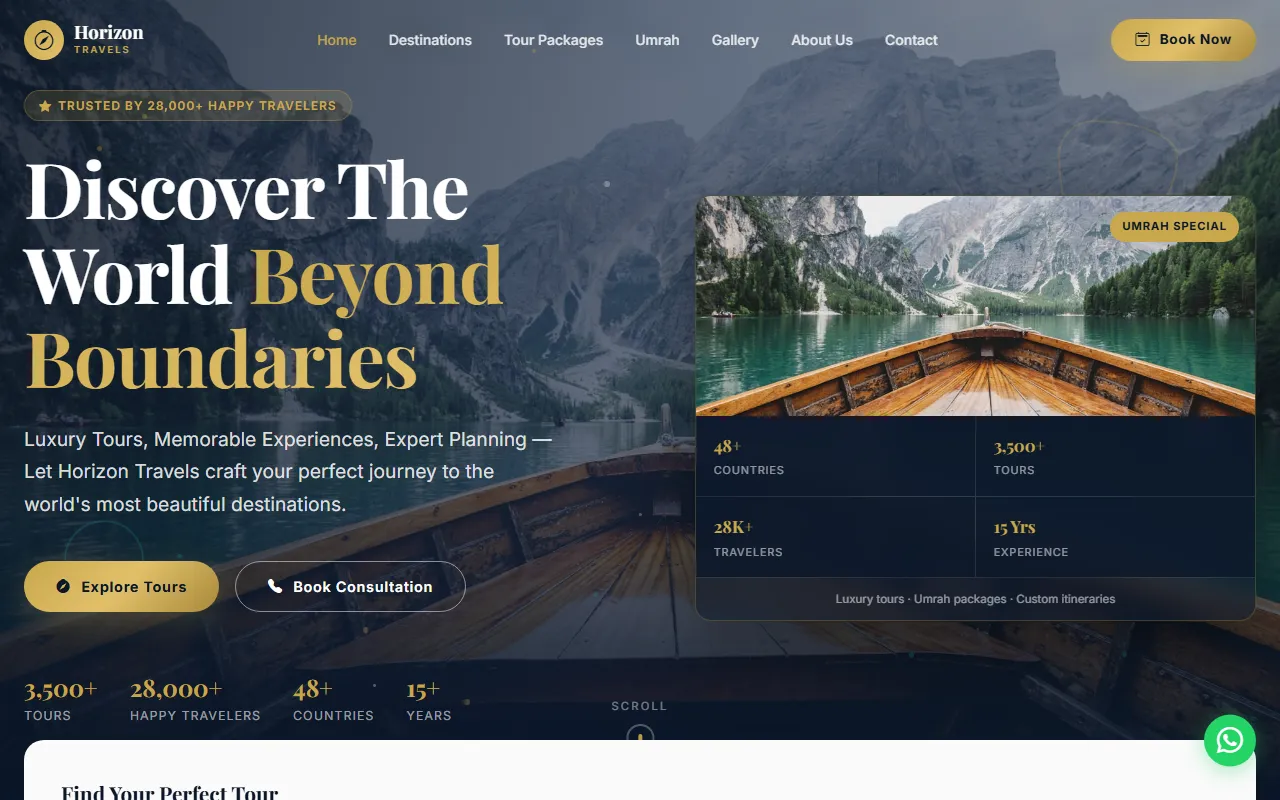
Horizon Travels
A luxury travel agency website — destinations, tour packages, Umrah specials, gallery, booking flow, and a gated preview for prospective travel agency owners.
View case study →
FAQ
Web & mobile FAQs
Straight answers before you open a conversation. Prefer a walkthrough? Start below.
Do you build native iOS/Android or cross-platform?
Can you work with our existing backend or API?
How do you handle performance and accessibility?
What does a typical web or mobile project timeline look like?
Should we start with a PWA or a store app?
Can you redesign an existing site without a full rebuild?
Do you provide ongoing frontend support after launch?
How do you keep design and engineering aligned?
Do you work with international and remote clients?
Let's work together
Have a project in mind?
Tell us about goals, constraints, and timeline for Web & mobile applications. We reply with a concrete next step — not a generic brochure. Remote engagements for teams in North America, Europe, and the Middle East welcome.
- Emailinfo@aagtek.com
- Phone+92 331 8895166
Send us a message
We typically reply within one business day.