
Insights · SaaS & product
Custom Software Development Playbook: From Idea to Scalable Solution
Transform your ideas into scalable solutions with our Custom Software Development Playbook. Learn actionable steps to streamline the process and deliver effective software.
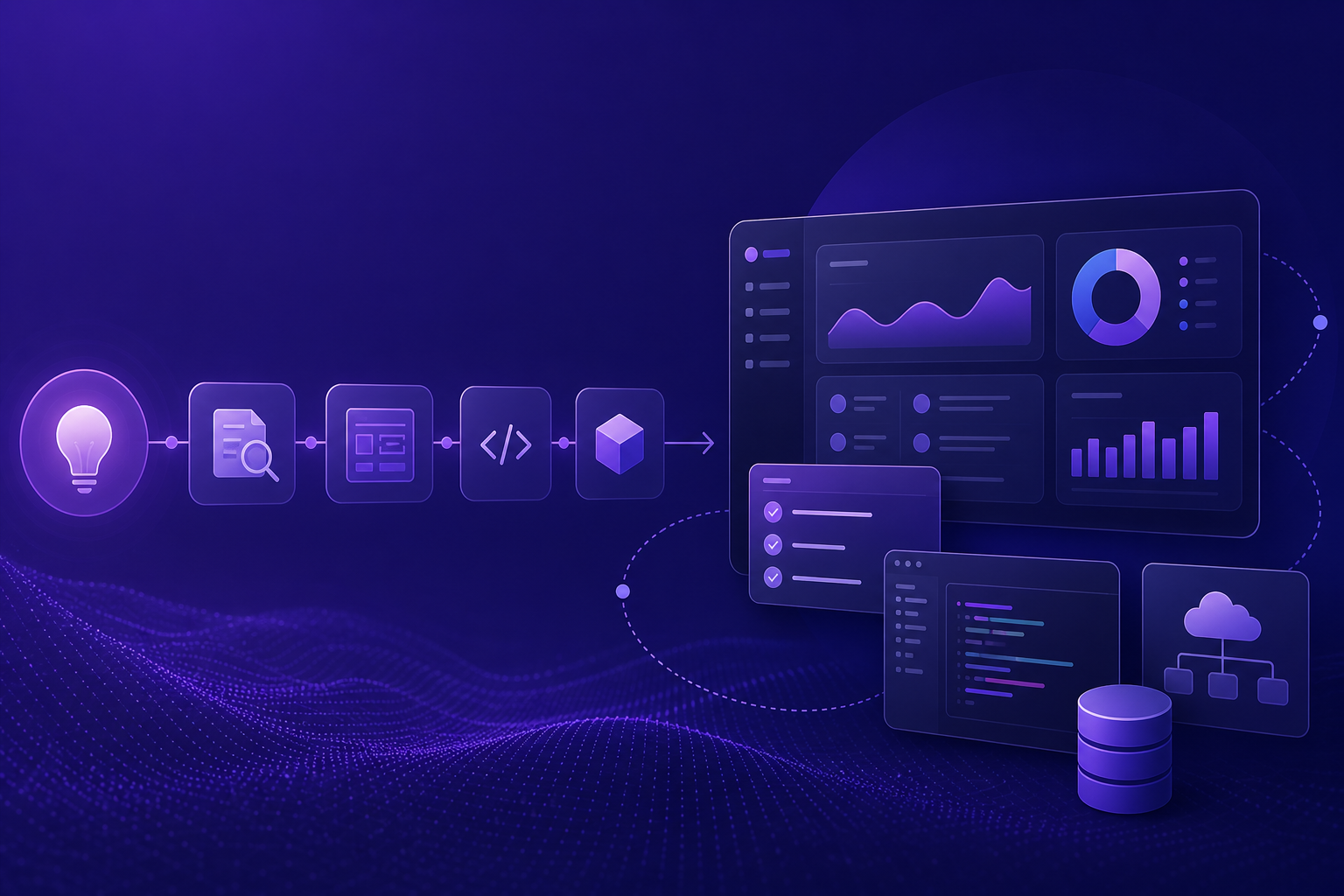
We've seen product managers spin their wheels in lengthy discussions over vague requirements, leading to stalled projects and misaligned expectations. The common artifact here is the PRD, which often lacks clarity and details.
We handle this by implementing a structured template for the PRD that includes specific user stories and acceptance criteria. This clarity leads to better alignment among stakeholders and a faster development cycle.
This playbook is for software developers, project managers, and product owners who want to streamline custom software development from conception to launch. After reading, you'll leave with a concrete rollout plan.
Common Pitfalls in Custom Software Development
In many teams, we see a disconnect between development and business goals. This disconnect often results in miscommunication and project delays. Developers may not fully understand the business requirements, leading to rework and frustration.
Another frequent issue is the lack of a robust feedback loop. Without regular testing and user feedback, we risk shipping features that don't meet user needs or expectations.
A Concrete Rollout Plan for Success
- Define a clear PRD that includes user stories and acceptance criteria (e.g., 'As a user, I want to reset my password so that I can regain access to my account').
- Use Jira to create a sprint backlog and prioritize features based on user impact and business value.
- Set up GitHub Projects for transparent visibility into the development process, enabling team collaboration and accountability.
- Implement a CI/CD pipeline to automate testing and deployment (e.g., using CircleCI or GitHub Actions).
- Conduct regular user acceptance testing (UAT) sessions to gather feedback and iterate on features before full deployment.
Checklist Before You Start Development
- Do you have a well-defined PRD that outlines user stories and acceptance criteria? Yes/No
- Is there a project management tool in place for tracking progress (e.g., Jira, Linear)? Yes/No
- Have you established clear communication protocols among the development team and stakeholders? Yes/No
- Is there a user feedback mechanism integrated into the development cycle? Yes/No
- Do you have a testing strategy that includes both unit tests and user acceptance testing? Yes/No
Avoid These Common Mistakes
- Failing to involve stakeholders early in the PRD creation, leading to misalignment.
- Neglecting user feedback during the development cycle, resulting in user dissatisfaction.
- Skipping documentation of development processes, which complicates onboarding for new team members.
- Overcomplicating the MVP with unnecessary features instead of focusing on core functionalities.
- Ignoring technical debt, which can slow down future development cycles.
Defining Success in Custom Software Development
Success in custom software development means shipping a product that meets user needs and aligns with business goals. Key metrics to track include:
- Time-to-market: Aim for a defined timeline (e.g., 6-8 weeks for MVP).
- User satisfaction: Measure through NPS or user feedback scores post-launch.
- Defect rate: Track the number of bugs reported post-deployment and aim for a reduction over subsequent releases.
- Deployment frequency: Aim for at least bi-weekly deployments to maintain momentum and responsiveness to feedback.
Frequently asked questions
- What is a PRD and why is it important?
- Define the PRD as a critical document that outlines project requirements and user stories. Avoid vague descriptions.
- How often should we conduct user acceptance testing?
- Schedule UAT sessions at key milestones to gather timely feedback. Avoid waiting until the end of development.
- What tools should we use for project management?
- Use tools like Jira or Linear to track project progress and prioritize tasks. Avoid relying solely on email.
- How can we ensure better alignment between development and business goals?
- Involve stakeholders in the PRD process and maintain regular communication throughout development. Avoid siloing teams.
Build this on your stack
AAGTEK ships AI-native software, SaaS platforms, integrations, and secure cloud systems—designed for measurable outcomes, not slide decks.